
How to Search Criminal Dockets
Indiana MyCase is the first online stop for a public Howard County criminal docket. Search by case number when you can. A name search may pull up several people. A full case number points to one court file. Howard County uses the identifiers 34C01 and 34D01 through 34D04. Choosing the Criminal & Citation category plus a Howard court filter narrows a broad statewide result.
Treat MyCase as a convenience view, not the official Howard County criminal court record. The system may require a CAPTCHA and caps its results. Older converted events can carry sparse labels. When a record is absent, unclear, or needed as a certified copy, go to the Howard County Clerk at 104 N. Buckeye Street, Room 202, Kokomo. You can also call 765-456-2000 during the published weekday hours of 8:00 a.m. to 4:00 p.m. The counter and phone routes matter most when an online balance or a recent entry looks incomplete.
- Choose Case or Name on MyCase.
- Enter one primary identifier, preferably the case number.
- Limit the search to the known Howard court.
- Open the result and read the CCS in date order.
- Verify a setting, balance, or official copy with the Clerk.
Howard Criminal Docket Codes
In an Indiana case number, the third group identifies the case type. The first group identifies Howard County and its court. A pattern like 34D03-YYMM-CM-###### points to Superior III. It also carries a filing year and month, a misdemeanor code, and a sequence. Administrative Rule 8 supplies the format. MyCase will let you drop the hyphens and leading zeroes.
- F1 through F6
- Current level-felony codes. The code does not prove guilt.
- CM
- A misdemeanor case code.
- MR
- A murder case classification.
- MC
- A miscellaneous criminal proceeding.
- CF and FA through FD
- Legacy felony codes found in older files.
Treat the code as a routing clue, nothing more. Read the charging entry and final disposition before drawing any conclusion. Howard Circuit is 34C01, and Superior I through IV use 34D01 through 34D04. The second group gives the filing year and month, not the date of a later hearing or judgment. The fourth group is just the sequence. If a case moved between Howard courts, its transfer entries and current identifier show where the record now sits. Never guess a sequence. Ask the Clerk, or consult an original public pleading, when a valid docket will not return under the expected format.
What a Criminal Docket Shows
A Howard County criminal CCS opens with a case header, then lists events in chronological order. The list can include a charging instrument, initial hearing, bond action, appearance, discovery notice, motion, pretrial conference, plea or trial setting, judgment, sentence, restitution, probation action, appeal, and closure. Note that a linked document may be absent even when its event appears in the CCS.
| Case Number | Howard court, filing period, case code, and sequence. |
|---|---|
| Charge Entry | The filed allegation and any later amendment or dismissal. |
| Hearing Settings | Date, time, court, and hearing type, subject to change. |
| Plea or Verdict | The recorded procedural outcome, not merely an accusation. |
| Disposition | Dismissal, judgment, sentence, or other closing event. |
| Financial Entry | Costs, fines, or restitution that may not be a complete current balance. |
Words matter on a docket. "Motion filed" does not mean granted. "Warrant issued" does not establish a conviction. A dismissed count can stay visible as part of the procedural history. The header shows status, but "open" does not mean every document is public, and "closed" does not mean every obligation has been paid or every appeal is complete. Online financial panels may omit interest or later charges. For a current balance, the Howard County Clerk is the source. Pin down an exact CCS date and title before asking whether a document is online, available only at the counter, or restricted.
Howard Criminal Court Assignments
Howard County has five current courts of record. Criminal work is divided by subject. Howard Circuit Court holds general criminal jurisdiction plus exclusive juvenile jurisdiction. Superior I emphasizes criminal drug and domestic-violence work, adult drug court, and re-entry. Superior III takes driving offenses, traffic infractions, and misdemeanors other than drug misdemeanors. Superior IV carries general civil and criminal jurisdiction, and Local Rule LR34-CR2.2-29 controls criminal allocation. The official Superior I description documents its criminal and program focus.
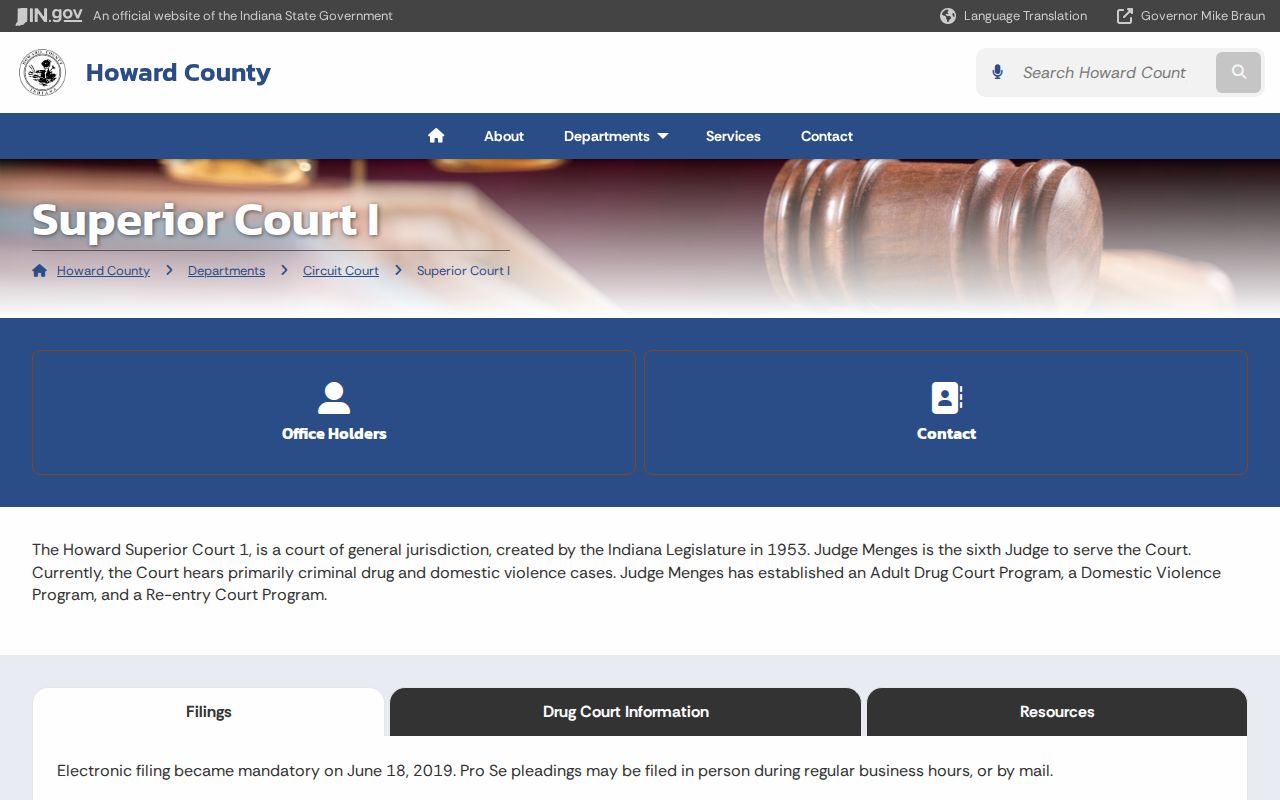
This division explains why a drug-related criminal CCS may sit in a different court than a routine misdemeanor file. The Superior IV court page records its broader jurisdiction.
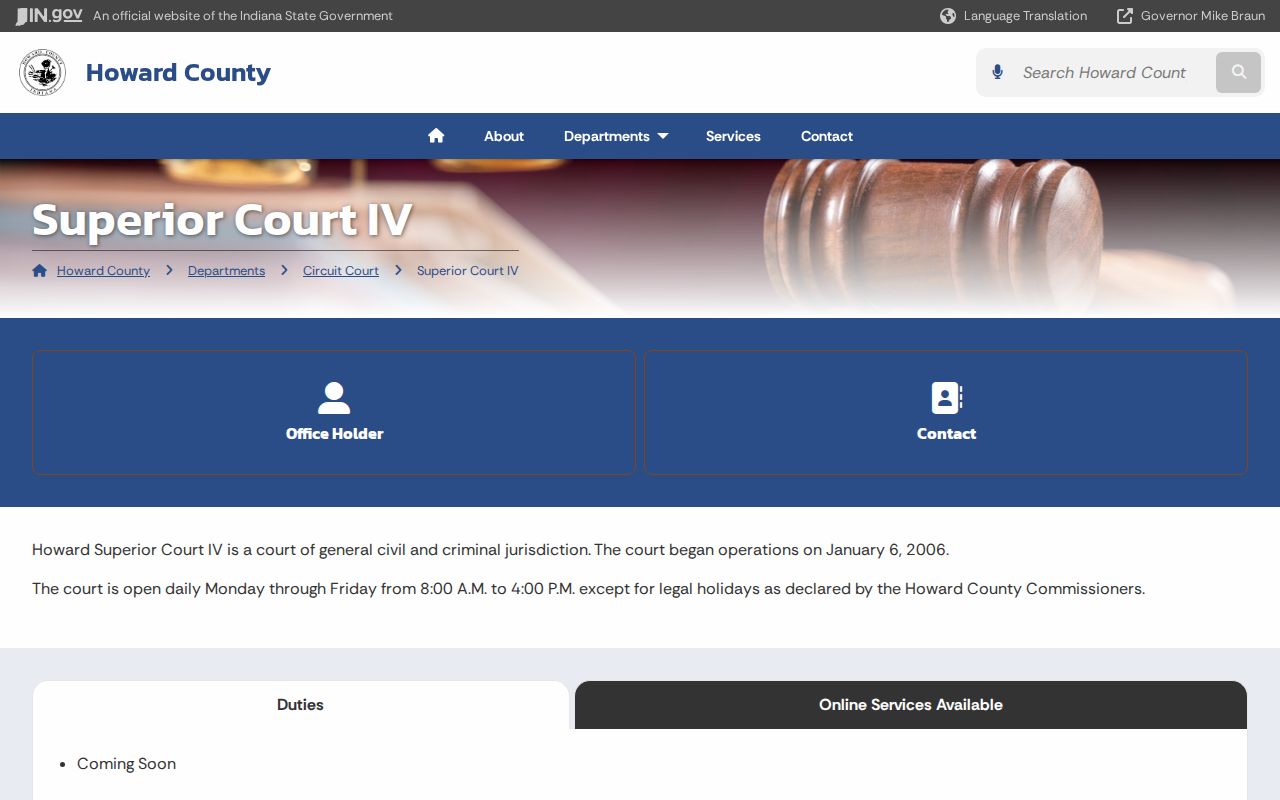
The court identifier remains the safest routing fact when divisions have overlapping authority.
Stages on a Criminal Docket
No criminal case follows one fixed path. Yet the Howard County criminal docket usually records a recognizable sequence. Read each event as an event, not as proof of the next result. A probable-cause finding only permits a matter to proceed. A pretrial setting is not a trial. A plea filing stays distinct from a judgment and sentence.
Docket flow: Charge Filed › Initial Hearing › Pretrial Settings › Plea or Trial › Judgment › Sentencing › Closure
Later events can amend the path. Counts may change, a hearing may be reset, or an appeal may open a separate appellate record. So read the CCS from its start through the newest event. An appearance marks an attorney's formal entry. Discovery notices concern the exchange of material. A pretrial conference manages the case and does not decide guilt. A plea agreement may be filed before the court accepts it. Sentencing follows judgment, and post-sentence motions or an appeal can add later entries.
Howard County criminal dockets may also list bond review, restitution, probation, and compliance hearings. Those titles describe procedural steps only. They do not disclose all facts behind a decision. Treatment or supervision details may be excluded. Compare a short event label with the signed public order when one is available.
Howard Adult Drug Court
Howard Superior I opened its adult drug court in February 2007. To join, an eligible participant pleads guilty. Then the participant follows treatment, sobriety, and other program rules. Graduate, and the charges may be dismissed. Fail out, and the participant returns for sentencing. Those are the program's rules, not a forecast for any one Howard County criminal case.
For the official public framework, read the county's Community Supervision description.
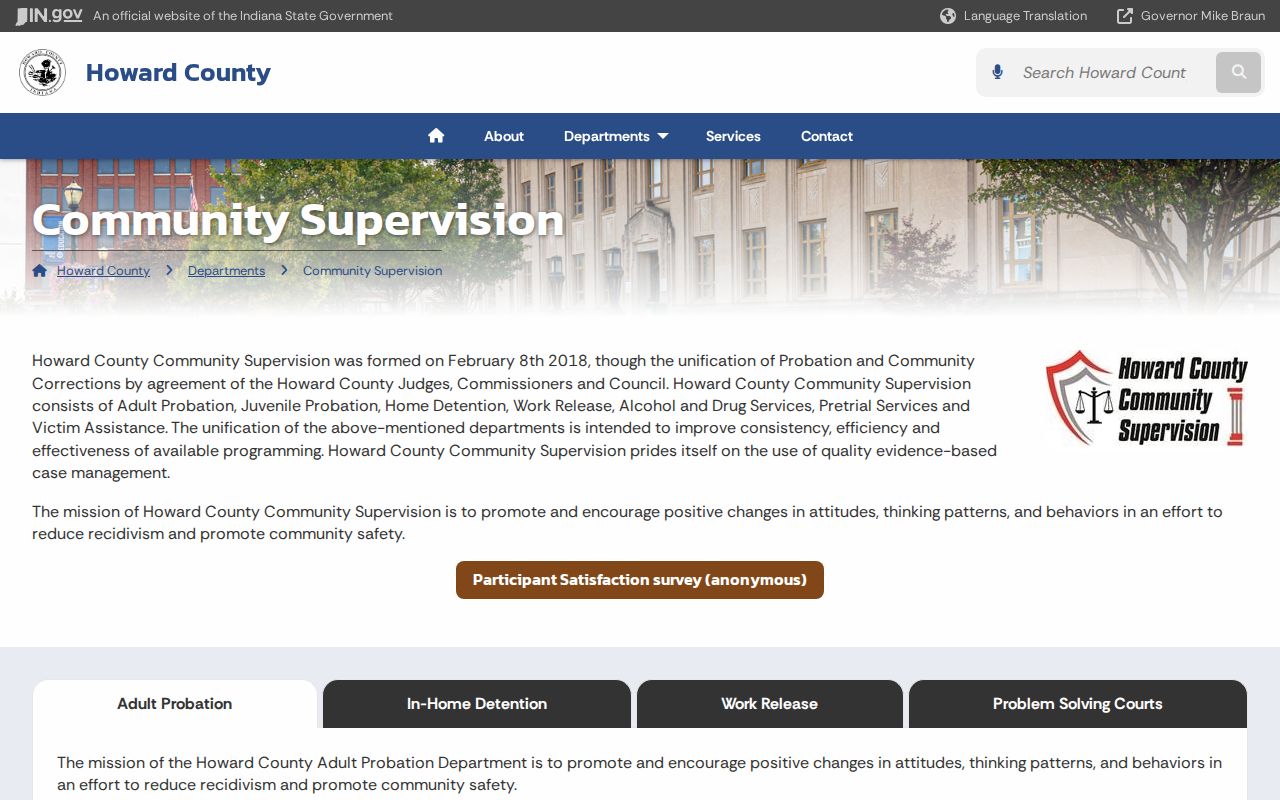
A public CCS can list admission, review hearings, termination, graduation, or sentencing. Confidential treatment and supervision notes stay out of view.
Which Court Holds Criminal Dockets
The Howard County Clerk holds the official court records for both Circuit and Superior Courts. MyCase searches the public side of Odyssey across both of them. Each court has its own slice of the work. Circuit handles juvenile matters and general criminal cases. Superior I carries the local drug and domestic-violence emphasis. Superior III takes non-drug misdemeanors and driving matters, and Superior IV has broad criminal jurisdiction. Check the court code inside a case number. It tells you which court actually keeps a given CCS.
There is one wrinkle. The old Howard County Court identifier 34E01 still sits in the archived Odyssey court list. A legacy result might carry that code. Don't treat the abolished court as if it still hears new cases. Check the transfer history or the current court identifier, or ask the Clerk. Federal criminal matters live elsewhere entirely. Howard County sits in the Southern District of Indiana, Indianapolis Division. Cases there run through federal PACER and CM/ECF. MyCase does not reach them.
Howard Charges Versus Outcomes
A charging information or indictment states allegations, nothing more. It is not a conviction. Track each count through amendment, dismissal, plea, verdict, judgment, and sentence, because one Howard County criminal docket can hold several counts with different outcomes. Event titles often trace the sequence, and a linked order adds detail when online access permits.
Read the full sequence. Bond, charging, and initial-hearing entries are procedural facts. Only the later disposition shows whether a count was dismissed or resulted in judgment.
For official court news, the Indiana Judicial Branch Howard court news archive is a separate source.
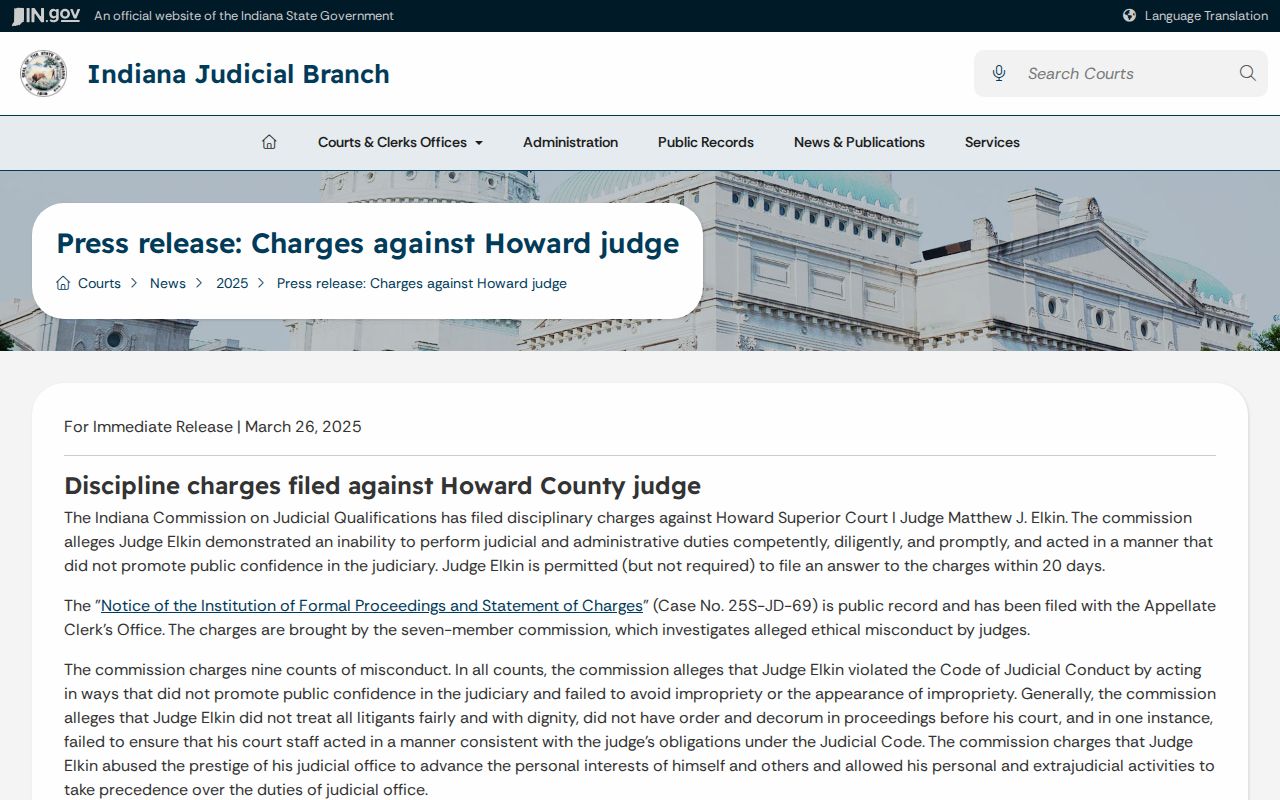
Court administration news is not the CCS of some unrelated criminal matter.
Public Access and Sealed Criminal Dockets
Indiana court records presume public access. Yet the real level of access turns on the record, the case type, and who is asking. MyCase shows public CCS entries and some documents. The Howard County Clerk keeps the official file. It allows courthouse inspection or copies when permitted. Administrative Rule 9 also requires courthouse access during regular hours. It adds daily calendars, subject to exclusions. Call ahead to confirm terminal access and the right counter.
Limits apply to juvenile, paternity, mental-health, protection-order, sealed, and expunged material. Knowing a cause number does not unlock a restricted file. Supervision notes, treatment details, and protected identifiers can stay outside public view. A missing result never proves that no case exists.
Indiana access rules:
Access to Court Records Rule 5 identifies excluded records.
Rule 6 governs exclusion by court order.
Indiana Code 35-38-9 governs criminal-record expungement.
The official expungement source explains why a vanished public entry should not be rebuilt from unofficial copies.
If a Howard County criminal docket is sealed, use the Clerk or court channel.
When Howard Settings Move
A criminal setting can move for many reasons. A motion or court order can cause it. So can a conflict or some other cause. Howard Local Rule LR34-TR53.5-11 demands a written, verified continuance request. It must state cause. It must also address notice, consent, objection, or the inability to reach the other side. Filing that request does not move the date. The signed order or the updated Howard County criminal docket controls.
Check MyCase again close to the hearing. Then call the assigned court or Clerk if a change is fresh. The public calendar can lag a pleading, and an Odyssey text is only a reminder. Maybe a party misses a setting. Maybe the dates conflict. Quick contact with counsel or the court beats assuming the matter was reset. For the separate scheduling view, see the Howard County court calendar.
Note: A pending continuance request is not a new court date. Watch for the court's order and the updated CCS entry.