
How to Search Civil Dockets
Indiana MyCase is the online first stop for a public Howard County civil docket. A case number is the best key because a common party name may return many statewide results. Name searching accepts an individual last name or a business name. File-date fields use the initial filing date, not a later hearing or judgment date. Limit the results to Howard County and the appropriate civil category when the live interface permits it.
MyCase is not the official record. For a recent filing, public document that is not linked, or certified copy, contact the Howard County Clerk at 104 N. Buckeye Street, Room 202, Kokomo, or call 765-456-2000 during published weekday hours. Courthouse inspection is an important access channel when remote access is narrower. Ask about the exact case number, entry date, document title, access level, copy fee, and certification before traveling or mailing a request.
- Choose Case or Name on MyCase.
- Enter the full case number or enough party detail to narrow the result.
- Apply a Howard court, civil category, date, or status filter.
- Read the CCS from filing through the newest event.
- Request an official or certified copy from the Clerk when needed.
Howard Civil Case Codes
Indiana Administrative Rule 8 gives each Howard County civil docket a four-part number. In 34D02-YYMM-CT-######, 34 identifies Howard County, D02 identifies Superior II, YYMM is the filing year and month, CT means civil tort, and the last group is the sequence. Hyphens and leading zeroes are optional in a MyCase query.
The official Administrative Rule 8 display supplies the case-type system.
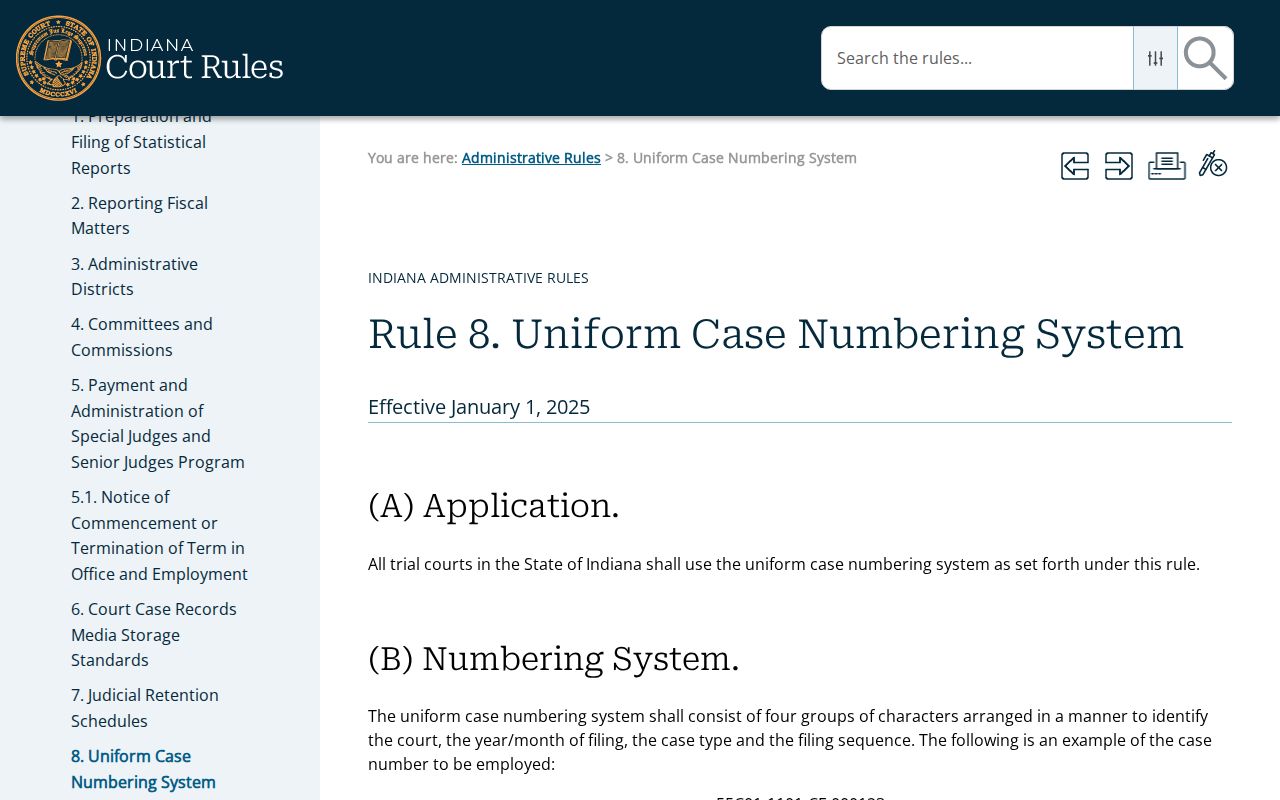
Reading the number prevents a Howard civil case from being confused with a like-named filing elsewhere in Indiana.
- CC
- Civil collection.
- CT
- Civil tort.
- EV
- Eviction under the current distinct code.
- SC
- Small claims.
- DC or DN
- Domestic relations with or without children, subject to access limits.
- TS or TP
- Tax sale or tax deed.
What a Civil Docket Shows
A Howard County civil CCS begins with identifying data and then records procedural events. The entry list can show the complaint or petition, summons, service return, answer, attorney appearance, discovery-related filing, motion, response, conference, hearing, order, judgment, and enforcement. A CCS label is not always the full document, and a document may be public only at the courthouse.
| Case Number | Court, filing period, case code, and sequence. |
|---|---|
| Parties | Public plaintiff, defendant, petitioner, or respondent roles. |
| Service | Issued, served, returned, refused, mailed, or waived status. |
| Filings | Complaint, answer, motion, notice, or other listed event. |
| Setting | Conference, hearing, or trial date subject to later order. |
| Judgment | Dismissal, adjudication, satisfaction, or enforcement event. |
Howard Civil Filing Allocation
Howard local rules assign categories before applying a percentage split. Circuit Court keeps juvenile, paternity, adoption, county tax-sale, and other legally assigned matters. Superior III keeps small claims and specialized-driving-privilege petitions. Other civil filings are allocated 19 percent to Circuit and 27 percent each to Superior I, Superior II, and Superior IV. Mental-health matters are randomly assigned between Superior II and Superior IV.
The ratio is an administrative allocation rule, not a party's choice of judge. A specialized category overrides the general draw. The court identifier on the Howard County civil docket is therefore more useful than an assumption based only on the subject of the dispute.
Types of Civil Cases on the Docket
Howard County civil dockets cover collections, torts, commercial matters, evictions, small claims, domestic relations, protection orders, judicial review, reciprocal support, tax matters, and other proceedings. The code identifies the docket category, but the opening pleading and later orders show the actual issues and outcome. Older converted files can use former codes.
- Collections and commercial-eligible cases.
- Tort and other general civil claims.
- Eviction and small-claims matters.
- Domestic relations and support matters where public.
- Tax sale, tax deed, protection-order, and judicial-review cases.
Howard Small Claims Route
Howard Superior III handles all small claims. That is a local routing fact, not merely a search filter. A cause number beginning 34D03 and carrying SC points to that docket. Small claims follow specific hearing, service, and continuance provisions, so a searcher should not assume that the timeline matches a general civil jury case.
The Howard County Clerk publishes a Small Claim Form and a Fee Waiver Form among its local resources. A listed form does not prove that it fits every matter or that filing is complete without service and fee steps. The Clerk accepts new filings and keeps the official record. Attorneys use required e-filing, while self-represented filers may e-file or deliver an authorized hard copy under the court instructions.
Evictions use EV under the newer statewide coding approach. A Howard eviction docket can include a possession issue, money claim, judgment, or later enforcement, and those are not interchangeable events. Read the order rather than inferring the outcome from the case code.
Settings and Hearings on Civil Dockets
A Howard County civil docket may show a status conference, pretrial conference, motion hearing, mediation event, jury setting, bench trial, or post-judgment hearing. The CCS gives the official procedural sequence. A calendar offers a narrower scheduling view. Confirm date, time, court, room, hearing type, and any remote marker with the assigned court, especially after a recent filing.
Howard Local Rule LR34-TR16-14 provides a pretrial conference in each civil jury case and uses a Certificate of Readiness with a ten-day objection window. LR34-TR40-15 governs trial settings and notice. These rules explain why a case may show pretrial, readiness, first-setting, or second-setting events before trial. The Howard County court calendar gives the focused date-checking route.
Howard Motions Are Not Orders
A motion asks the court to act. It does not show that the request was granted. Howard local rules do not make oral argument automatic, and proposed orders are only drafts until signed and entered. The CCS can list a motion, response, proposed order, and final order as separate events. Read each in date order.
A continuance request has the same distinction. LR34-TR53.5-11 calls for a written, verified request stating cause and describing notice, consent, objection, or an inability to contact the other side. The existing date remains in force unless the court grants relief. A scheduling order can also be amended later.
Myth: A filed motion changed the Howard civil case. Fact: The signed order or later CCS entry records what the court actually did.
ADR or mediation referrals work the same way. Referral does not prove settlement. A dismissal, judgment, or other disposition must supply the result.
Public Access to Civil Dockets
Indiana court records carry a presumption of public access, but remote access and courthouse access are not identical. MyCase may show a public CCS without a downloadable filing. A courthouse terminal can offer a broader public view, and the Howard County Clerk can provide inspection or an ordinary or certified copy when permitted. Call before visiting to confirm the counter, terminal, cost, and record format.
The official access rules exclude or limit whole cases and individual records. Juvenile, adoption, paternity, mental-health, protection-order, sealed, and sensitive family material may be absent or partly restricted. A missing Howard County civil docket result is not proof that no file exists. It may reflect an exclusion, legacy record, transfer, or indexing issue.
Indiana access rules: Rule 1 defines the court-record access framework. Rule 5 lists exclusions. Rule 6 governs exclusion by court order.
The Rule 1 source states the governing framework.
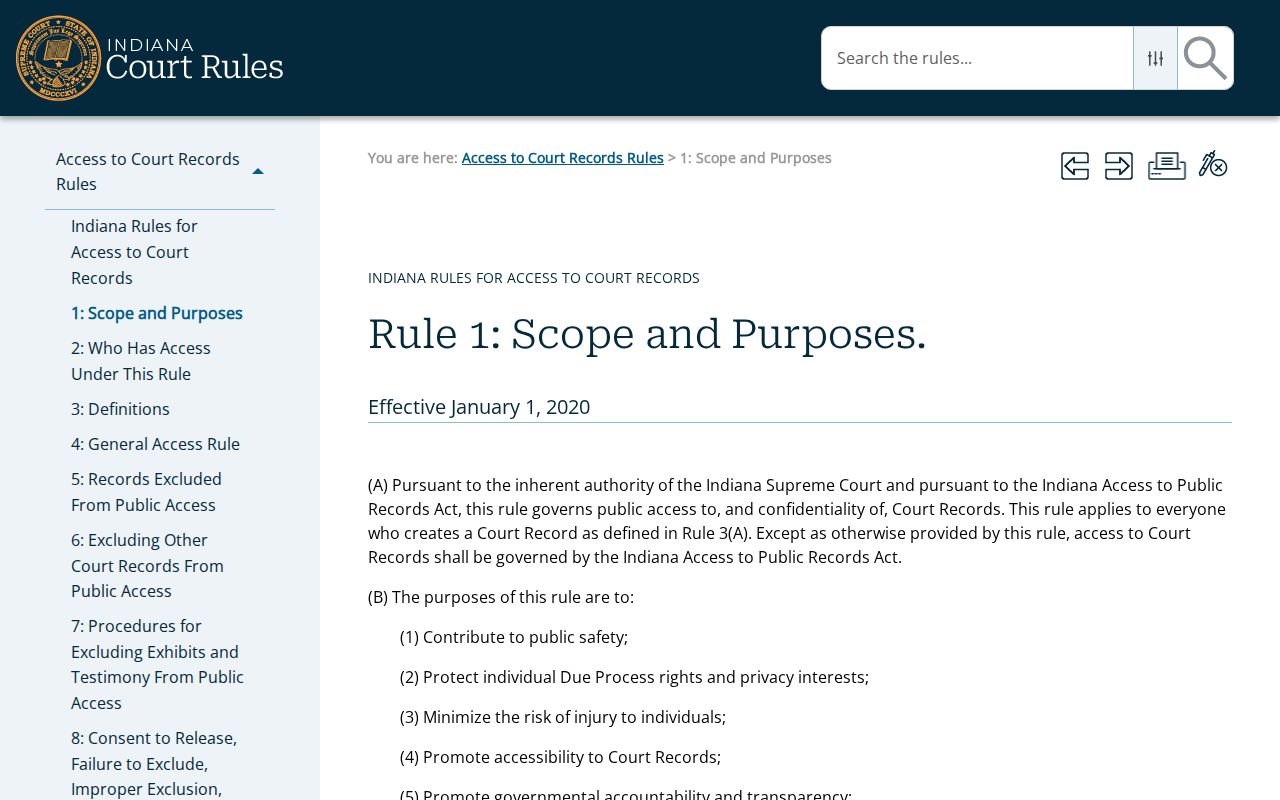
That presumption is applied with the audience and exclusion rules.
The Rule 2 audience provisions distinguish public, party, and attorney access.
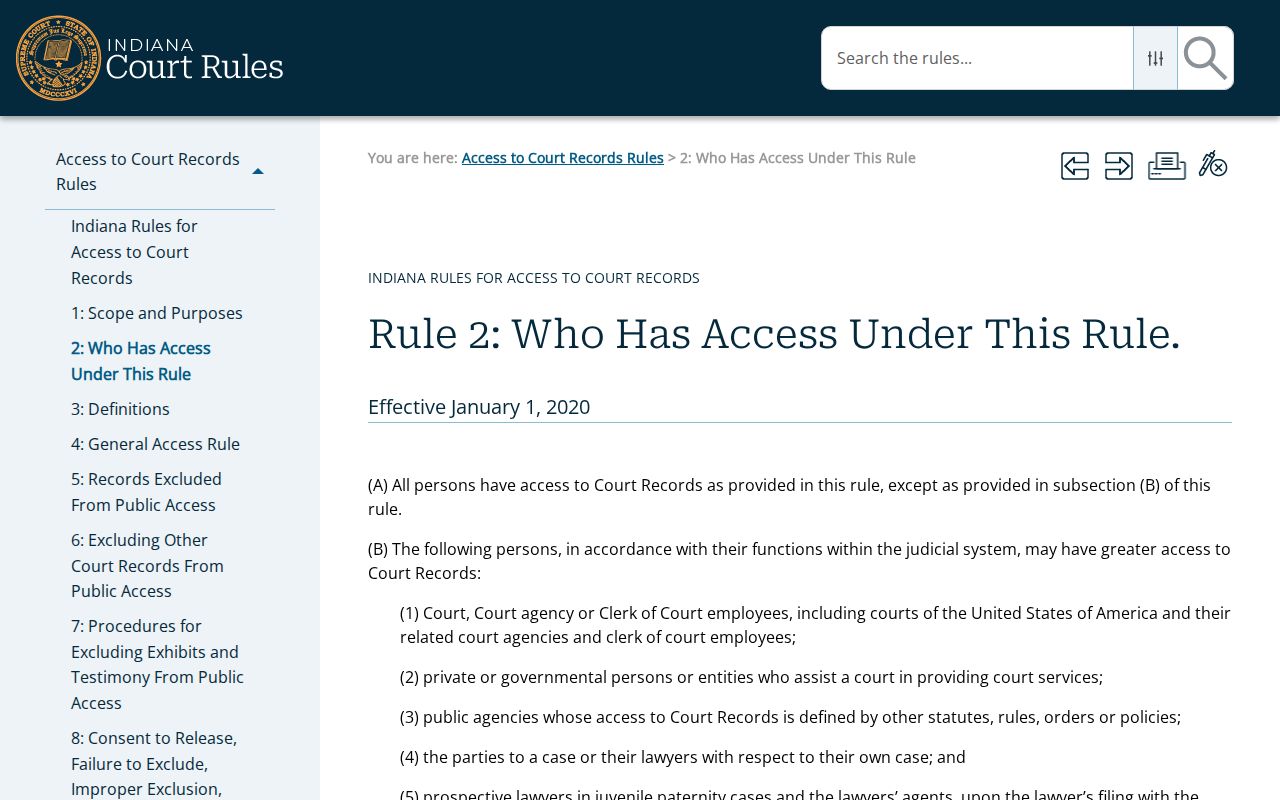
Authentication can change what an authorized party sees without making the same file public.
Howard Civil Access Boundaries
Access must be tested at the document level as well as the case level. Medical records, mental-health treatment, substance-abuse material, confidential family reports, privileged material, sealed exhibits, and protected identifiers can be excluded even when other CCS events remain public. The official rules provide the boundary, while the Clerk applies it to the requested record.
The general access rule explains public access and indications of exclusion.
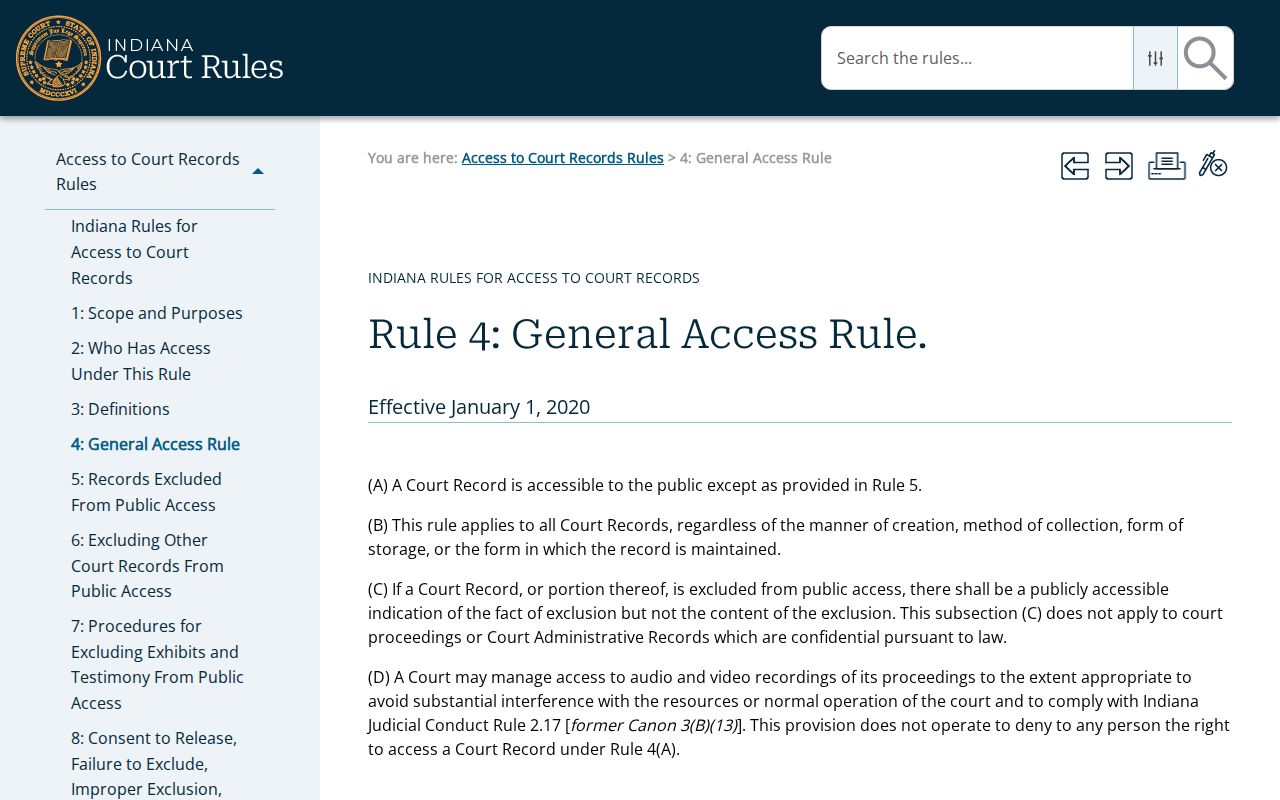
An exclusion marker should be respected rather than treated as a failed search.
The excluded-record list supplies the detailed categories.
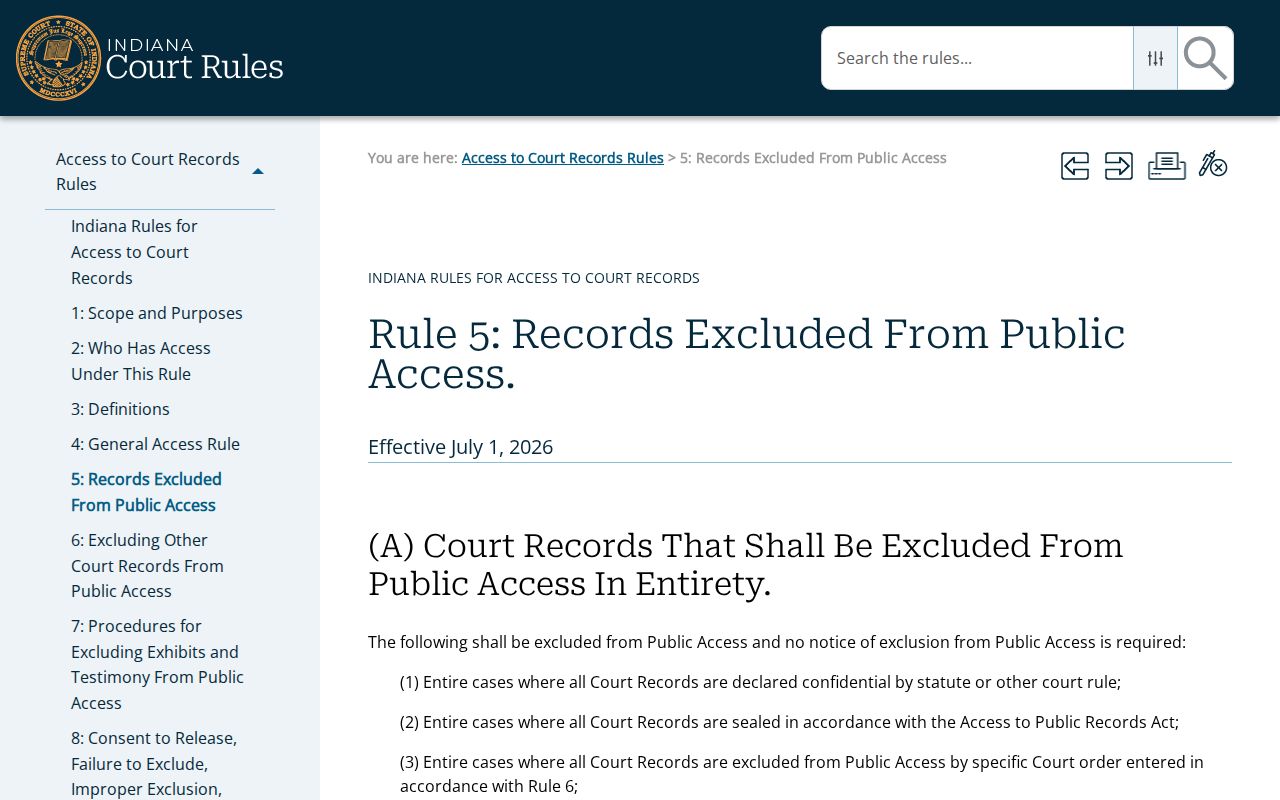
This list explains why protected family and treatment records may not accompany a visible event.
The order-based exclusion rule describes the court process.
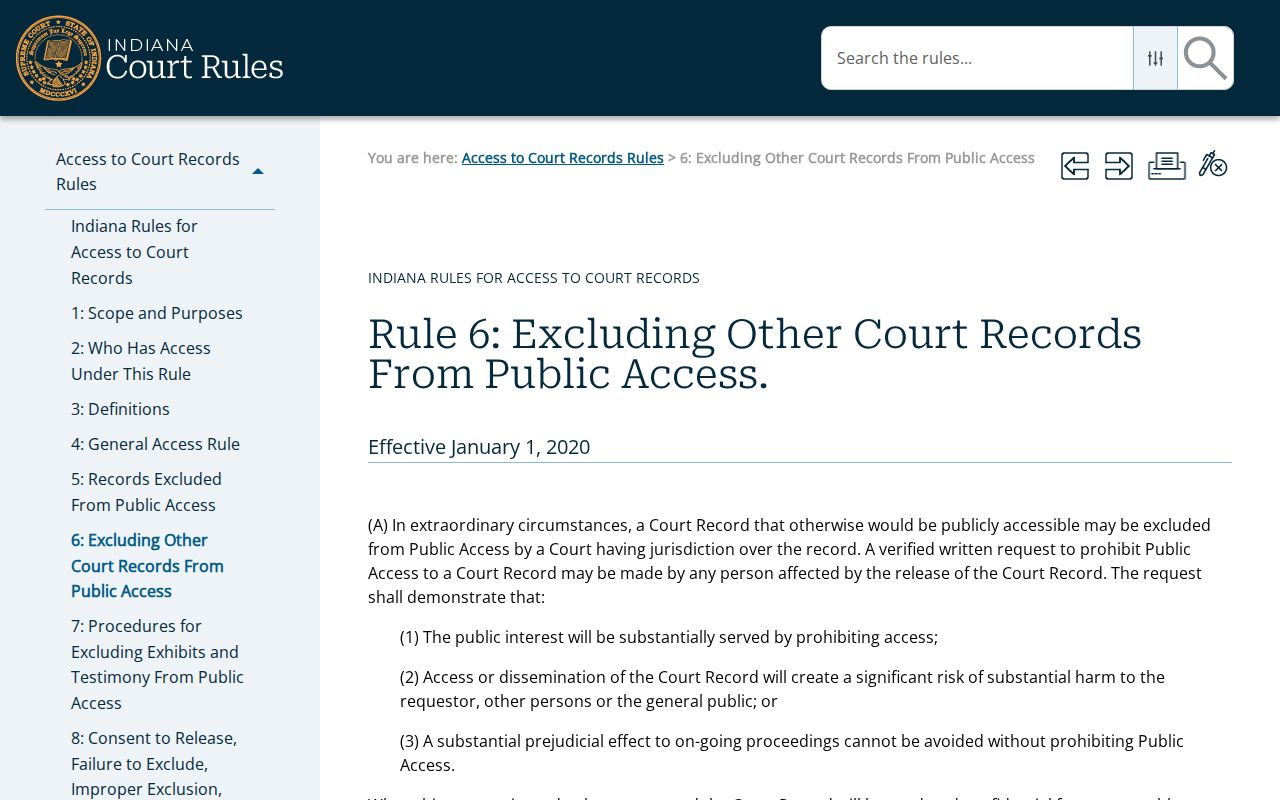
A sealing order limits access according to its terms; it does not invite reconstruction from unofficial sources.
Howard Civil Judgment Sequence
A judgment is not the last possible Howard County civil docket event. An amended judgment changes an earlier entry. A transcript of judgment supports later enforcement. Proceedings supplemental are post-judgment collection steps, not a new decision on the original claim. Garnishment or execution entries concern enforcement, while a satisfaction or release records that a judgment has been addressed to the extent stated.
Read these labels in order. A default entry and a final default judgment can be separate. A money judgment and a later possession order can address different relief. The CCS may remain active for enforcement after the merits dispute appears closed. Public financial entries can also be incomplete, so a current certified balance or judgment copy must come from the Howard County Clerk. A short event title should not be used to infer private financial facts beyond what a public order states.